
History: Just Do It.
College is a transitory yet important time in the life of a budding public historian. I am new enough to the study that I still view exhibits through the eyes of the general public, but I have enough experience in the industry to glean insight from facing history with that perspective.
I experienced this in a controlled environment last summer when I began working with the National Czech and Slovak Museum and Library. I visited the NCSML growing up; at 11 years old, sitting inside a replica steamer ship, putting on puppet shows, and twirling around with mannequins dressed in traditional Czech kroje interested me.
When I was hired last spring, it had been a while since my last perusal of the exhibits. In my first days, I walked through the galleries, actually reading labels to learn and retain facts, as wearing a shirt that said ‘staff’ meant people asked me a lot of questions and I made sure to learn some answers.
I spent the summer in these galleries, and found my experience changed. For one, the Revolution Starts in the Streets exhibit soundtrack became so imbedded in my mind that I could sing “We Didn’t Start the Fire” backwards in my sleep. But ‘Moonshot, Woodstock, Watergate, punk rock’ is not quite (though nearly) everything there is to know about the time period. Reciting major events from 1949-1989 is impressive, but there are no personal connections formed with events or characters.
Sensing this, I sought to ‘do’ history rather than ‘learn’ history. I filled a sketchbook with historic people and things as a way of curating my own Wunderkammer of interesting artifacts. ‘Doing’ is what the public desires from an exhibit. It is tedious to wander through a gallery trying to read and retain every fact available while Billy Joel (sort of) raps in the background. A good exhibit allows visitors to assemble their own mental Wunderkammer of artifacts. It allows them to be curators of their own experience.
I was drawn (literally, because I was drawing) to photos of soldiers. Revolution Starts in the Streets featured a floor to ceiling print of East German soldiers atop the Berlin Wall at Brandenburg Gate. The soldiers do not stand orderly, but rather lean whispering to one another, two days after the announcement of the Wall’s destruction.
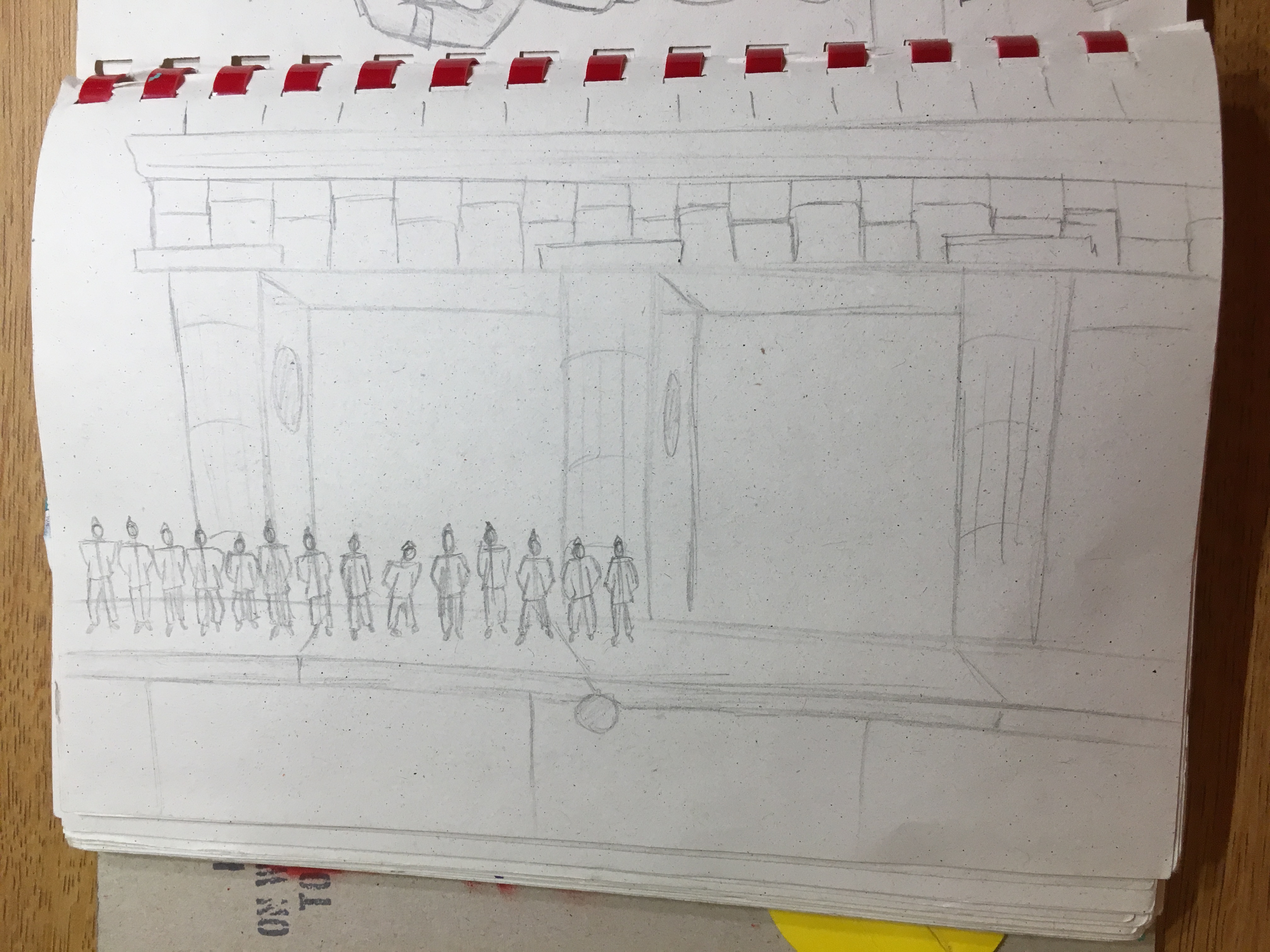
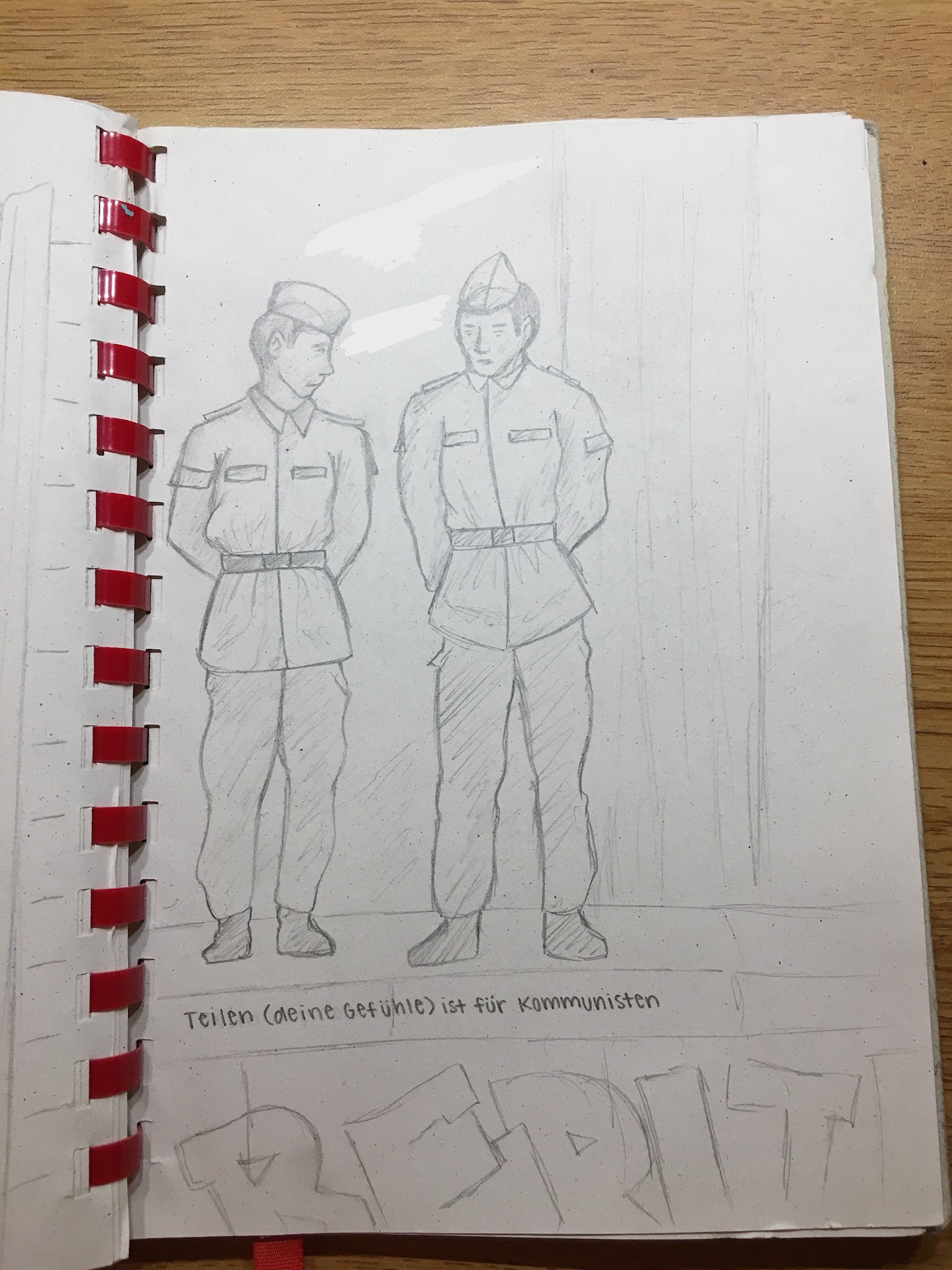
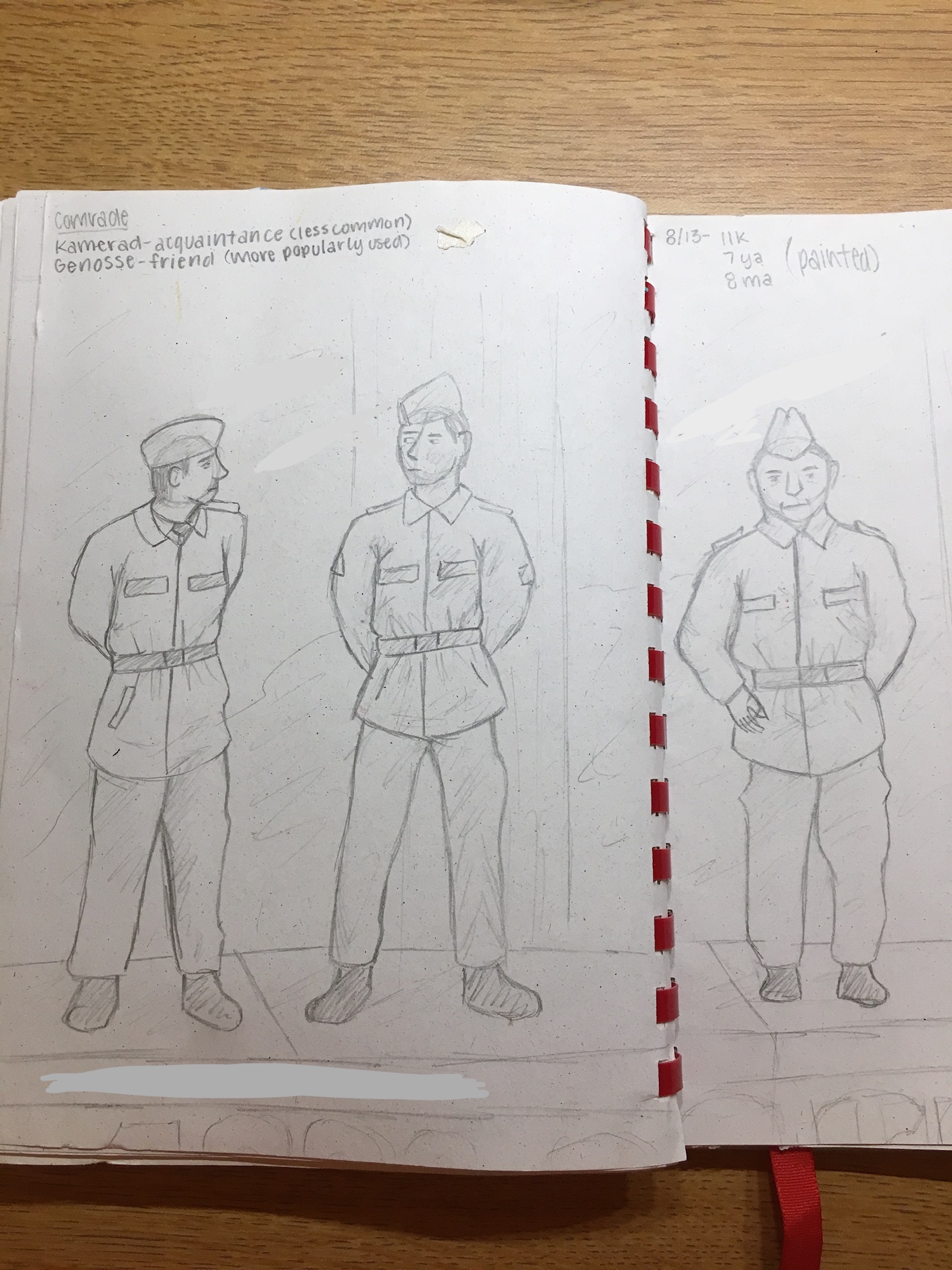
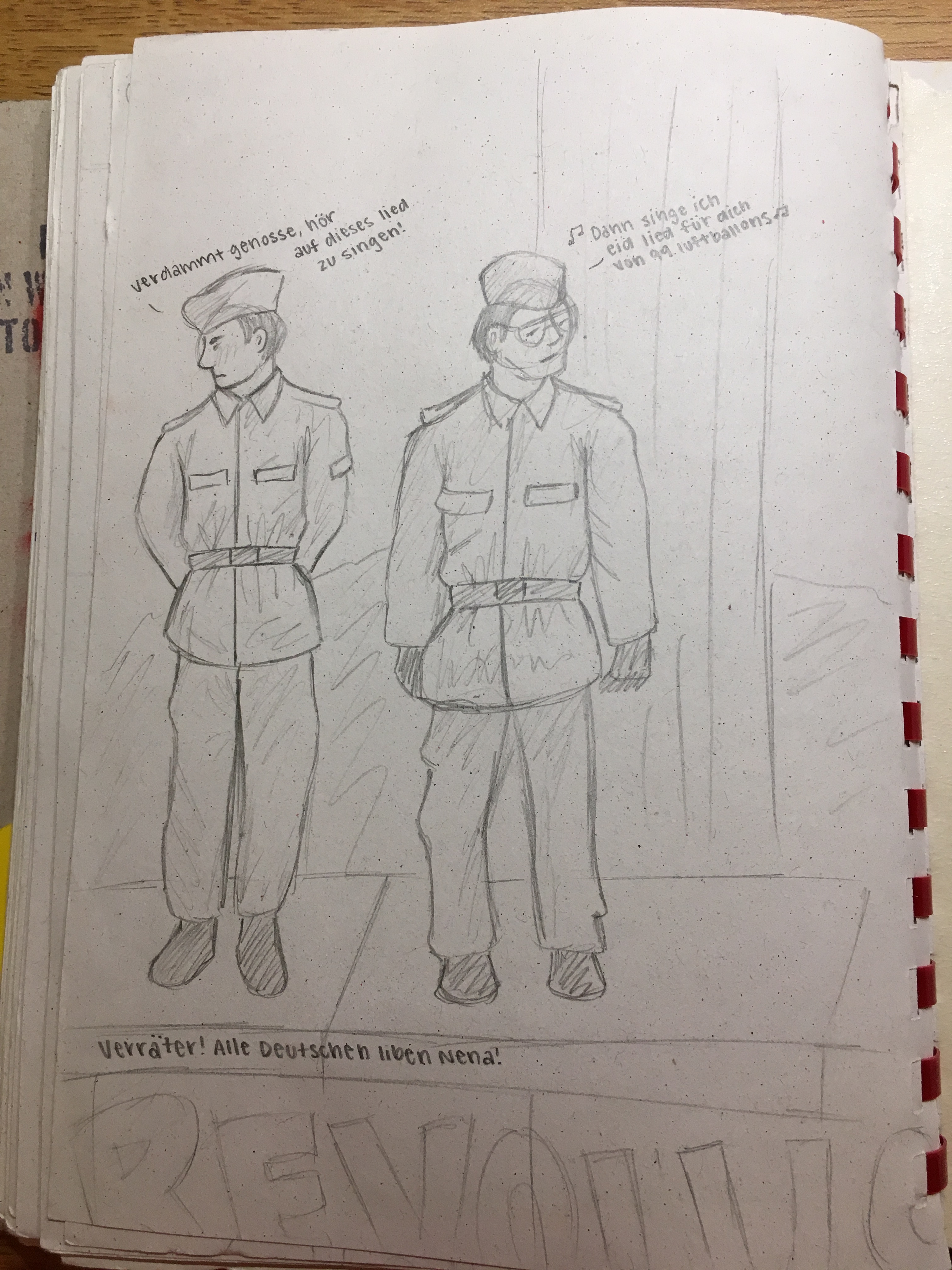
It was somewhat pointless for them to be up there and they knew it. It adds humanity to history to see soldiers depicted in candid ways, so I drew each in individual detail. Personal items such as this print play a critical role in connecting the public.
Museums like the NCSML do an exemplary job of curating exhibits so visitors can connect on a variety of levels. It is crucial that the detailed facts are available for people who come to learn about ‘foreign debts, homeless Vets, AIDS, crack, Bernie Goetz’, but just as this song juxtaposes random people, places, and events, so too must the minds of visitors be stimulated to compile their own souvenir Wunderkammer of personally compelling history.

Me, in my ‘staff’ shirt and smock, posing with artwork of Billy Joel on the Berlin Wall painted by my brother.
[Lyrics from “We Didn’t Start the Fire”, Billy Joel 1989.]
 The Melina Testin Historical Society