EXHIBIT REVIEW

A Snapshot of Jun Fujita’s Vision

Jun Fujita: American Visionary (Newberry Library, 24 Jan 2020 – 31 Mar 2020)

Jun Fujita: American Visionary at the Newberry Library presented a tour of the early 20th century Chicago in which Jun Fujita lived that inspired and served as subject for his work. Fujita published poetry and photography from 1915-1963, selections of which, along with artifacts significant to the time period and Fujita’s personal life, spanned ten cases, five walls, three monolith panels, and one digital monitor in The Newberry Library’s temporary exhibit space. The exhibit aimed to showcase the impact of Jun Fujita’s poetry, photography, and life. The big idea of the exhibit overlapped with the exhibit’s title, Jun Fujita: American Visionary; pieces chosen for the gallery established Fujita as an important influence on American culture, specifically the way history remembers Chicago. Jun Fujita: American Visionaryat the Newberry Library effectively lived up to its title by engaging closely with content, aesthetics, audiences, and stakeholders throughout the design experience to convey the most exhaustive representation of Fujita’s impact.

Jun Fujita: American Visionary communicated Fujita’s life though his photographic and literary work. Most visitors recognized Fujita’s iconic photography work before experiencing this exhibit, whether or not they knew beforehand that the work belonged to Fujita. Fujita’s photography from momentous points in Chicago history such as the Eastland Disaster and St. Valentine’s Day Massacre are synonymous with the stories themselves, and Fujita’s poetry intermingled itself amongst his photography. Found in beautifully bound editions of Fujita’s literary collections and in poetic verses printed on monolith walls, visitors engaged equally with Fujita’s photographic and poetic work.

The Newberry Library diligently acquired Fujita’s artifacts from a variety of sources to make a thorough exhibit encompassing of his entire career. Amanda Cacich, Assistant Registrar and Exhibition Specialist, explained that 90% of the material collected for the exhibit came from sources outside the Newberry’s own collections.1 The Poetry Foundation (PF) contributed many poetry books from the collection it curated for Jun Fujita: Oblivion, a 2017 exhibit that was smaller in scale but similar in scope to Jun Fujita: American Visionary. Graham Lee, Fujita’s great-nephew, provided nearly all items relating to Fujita’s personal life such as his passport, business card, and 1934 World’s Fair press pass. These personal items proved critical components in the process of making Fujita come alive to visitors who struggle to find the artist’s personal touch in photography when the subject almost always differs from the photographer. Presentation of personal artifacts and poetry books added an element of personality and humanity to Fujita’s presentation. 

The design and aesthetics of Jun Fujita: American Visionary offered a calm and minimalistic environment in which visitors reflected upon Fujita’s artwork. A sign of the times in 20thcentury photography and printing, the majority of Fujita’s work developed in black and white. Thick white mats and thin black frames outlined each of the photographs that hung on the wall at eye level, encircling the cases of books and other artifacts. To preserve photographs and books, the Newberry kept lighting dim, illuminating the gallery space just enough to allow poetry to be read and images to be viewed without damage.2 Collectively, shadows cast by carefully angled lights, silence save for muffled city sounds beyond the shaded windows, and the overwhelmingly greyscale palette, transported visitors back to 20th century Chicago as Fujita knew it. Aesthetics gave visitors the intimate feeling of entering into Fujita’s life and workshop.

Fujita’s poetic verses decorated monoliths planted across the exhibit landscape, providing variety in the midst of shorter display cases. Cacich explained that the PF specifically requested that poetry be displayed as large vinyl quotes affixed to walls.3 The design team employed the use of monoliths to avoid damaging permanent gallery walls. Not only did the monoliths serve as a necessary piece of infrastructure and present Fujita’s poetry in a striking manner, they also helped establish flow in the exhibit. Jun Fujita: American Visionary divided into themes rather than a chronological timeline, so visitors freely navigated from one case or photography collection to the next. The presence of monoliths amongst cases relieved the flatness of a gallery space otherwise filled entirely with ten identical cases and broke up the exhibit into small sections easily digestible by visitors.

Material spanned a variety of walls, monoliths, and cases in Jun Fujita: American Visionary, splitting the exhibit logically by theme.

By presenting the exhibit as a complete story with distinct themes, rather than advancing through Fujita’s life as a timeline, Jun Fujita: American Visionary achieved the big idea of showcasing Fujita’s impact as an American visionary. A chronological layout would have implied that at certain points in his career, Fujita was more or less of an American visionary. Theme-grouped organization expressed the idea that Fujita’s entire life earned him the title of American visionary, presenting various themes contributory to his status as a national influence in his own time and yet today.

Strangely, however, the back corner of the gallery featured a slideshow which Lee compiled of Fujita’s colorful wildflower photography on a digital monitor. Visually as excellent as all of Fujita’s work, the slideshow’s vivid palette stuck out garishly against the overwhelming desaturation of color in the rest of the gallery. Further, the use of technology detracted from the ‘Fujita’s workshop’ aesthetic identified. Fujita’s wildflower collection undoubtedly belongs on display, but the collection clashed with other artifacts in Jun Fujita: American Visionary, adding little to the narrative of Fujita’s life or vision. 

Colorful wildflower photos displayed on a digital monitor clashed with the sophisticated greyscale palette of other material displayed in Jun Fujita: American Visionary.

Jun Fujita: American Visionary attracted primarily audiences interested in Chicago history. The Chicago History Museum loaned many of Fujita’s photographs of the city’s most historical moments.4 Catering to the Chicago history audience, one case focused solely on Al Capone and another on the Eastland Disaster. Though Fujita involved himself with characters and events only as a photographer, artifacts centered around the world in which Fujita lived, and provided important historical context and information beyond his work. Rather than living as a detached artist, Fujita fully enmeshed himself in the city of Chicago in pursuit of inspiration.

Audiences shared positive reactions to Jun Fujita: American Visionary. Familiar photos shocked visitors who had not realized Fujita had been behind the immortalization of so many notable moments in Chicago history. Fujita’s poetry surprised others who recognized his photos but did not know his artistry extended beyond the lens and onto the page. A guestbook at the front of the gallery contains such comments from the public, proving the Newberry convincingly presented Fujita’s work in a way that supported his status as an American visionary, inspiring generations of Chicagoans with his work.

Though exhibit design focused primarily on the audience experience, other stakeholders also made a mark throughout the exhibit. Close collaboration with both Lee and the PF from the onset of the design process ensured the necessity for no major changes during remedial evaluation. Stakeholder artifact loans impacted the exhibit as Lee and the PF controlled the content of the exhibit. Paths between cases and monoliths met the Americans with Disabilities Act regulated width of 36 inches, and graphic image warnings appeared ahead of the gallery to most ethically present these items to the public.5 Appeasing all major stakeholders, Jun Fujita: American Visionary presented an all-encompassing display of Fujita’s life accessible and satisfactory to the public and those closest to Fujita’s memory.

The Newberry Library itself made up the final major stakeholder as Jun Fujita: American Visionary perfectly embodied the library’s mission statementThe Newberry’s mission calls for a, “dissemination of knowledge, especially in the humanities.”6 The educational nature of its exhibit on Fujita’s life and work exemplified the library’s mission. Combining art, literature, and history, Jun Fujita: American Visionary contained copious layers of educational promise for an audience of varying knowledge and interest levels. While the Newberry generally draws a more academic crowd, Jun Fujita: American Visionary fulfilled its promise to provide “an atmosphere of free inquiry”7 to a wide variety of visitors. Its presentation in the Newberry Library necessitated a highly educational experience for visitors.

Jun Fujita: American Visionaryat the Newberry Library successfully presented the impactful life of a photographer and poet by maintaining conscious focus on content, aesthetic, and audience. The Newberry Library curated the exhibit using photography, poetry, and personal items loaned from sources such as the Chicago History Museum, the Poetry Foundation, and Fujita’s great-nephew Graham Lee. Low lighting and multiple levels of display in the form of  cases, monoliths, and wall space created an intimate and engaging atmosphere. All design decisions made with stakeholders and audiences in mind, the exhibit depicted Fujita’s life in an accessible and ethical manner. Jun Fujita: American Visionary fused Jun Fujita’s greatest accomplishments into one succinct exhibit capable of proving his prominence as an American visionary and essential preserver of history for whom Chicago will be forever grateful.

__________

1. Amanda Cacich (Assistant Registrar and Exhibition Specialist, Newberry Library), email message to Newberry Library, February 7, 2020

2.Jun Fujita: American Visionary. Katherine Litwin and Fred Sasaki, curators. Newberry Library, January 24, 2020-March 31, 2020.

3. Cacich

4. Jun Fujita: American Visionary

5. Cacich

6. “About,” The Newberry, accessed January 30, 2020, https://www.newberry.org/about.

7. The Newberry.

WEEK IV

Recipe for Engaging the Public

Engaging the public is the most important yet unpredictable aspect of Public History, far beyond research, artifact acquisition, and label writing. 

For Historians, exhibits are infinitely interesting simply for their historical content. However, much of the public is not interested in history for history’s sake, and finds it rather boring. Enter the necessity for audience engagement techniques. I discussed the difference between learning and doing history in a previous post, but how can visitors be convinced to ‘do’ history when that history is uncomfortable, frightening, and difficult? 

Engaging with difficult material places emotional burdens on visitors, so institutions must convince visitors that engagement will be worth their strife.

WWII is a difficult topic which has been so romanticized over time that the horror has melted away to reveal heroic characters and glorious victories. In reality, most soldiers weathered very few heroic and glorious situations in the 1940s. I am lucky to be part of one of the last generations to hear these direct accounts from surviving soldiers. 

June 2016, my family and I boarded the Battleship USS Iowa in the Port of Los Angeles. I was entertained imagining the glory of war as I walked through the ship, identifying guns I would expertly aim at the enemy, a bunk I would occupy while writing letters to my lover back in the States, and the galley where I would eat marine sized portions of chow. In the galley though, I met not a plate of rehydrated potatoes, but WWII veteran Bob DeSpain.

DeSpain shared a sobering story of his Naval career spent aboard the USS Hoel, a similar ship to the Iowa, though without the same luck of surviving the war. DeSpain fought in the battles of Leyte Gulf, the largest naval battle in history, and Samar, during which the Hoel was sunk by Japanese destroyers. Of 339 aboard, DeSpain was one of 86 to survive a three day float in the Pacific awaiting rescue. Bob DeSpain passed away in 2017, and I am blessed to carry his story.

My change in perspective before and after meeting Mr. DeSpain highlights the difference between entertaining and engaging history. My passion lies in military history and I easily become caught up in romantic notions of war and heroism, i.e. military history as entertainment. Though movies, books, and exhibits present awful accounts of mutilation, death and violence, I cannot help but find a sense of quixotic attractiveness. Engaging stories of military history however, inspire gratitude to soldiers who endured the decidedly unromantic parts of war so I can experience it in the detached comfort of a theater or library. Before Mr. DeSpain, I was aboard the Iowa to be entertained and fulfill my peculiar craving to be a WWII soldier. After Mr. DeSpain’s story, I found that the ship was filled with ghosts whose stories of true bravery I had previously ignored.

As veterans like Mr. DeSpain pass, it is critical that museums keep their stories alive so future visitors can engage with difficult topics beyond a sense of entertainment. I do my part by sharing Bob DeSpain’s story. 

Bob DeSpain, my brother, and I stand in the galley aboard the USS Iowa. Obvious from my hat, I am enjoying my role as a WWII sailor.

WEEK III

Art History

Artistic styling is an undeservingly overlooked aspect of Public History. A good Public Historian must have an eye for design as much as a head for history. 

As an artist, I rarely consider this struggle consciously, as I feel I have internalized good design practices. I was initially drawn to the Exhibit Design field of Public History as a way to combine my love of history with my passion for art.

When I started this blog, I always knew it would be both educational, per assignment requirements, and entertaining, visually appealing, and stylistically consistent per my own standards.

My attention to detail meant much of the information read in the textbook this week struck me as glaringly self-evident. When it comes to designing labels, I assumed common sense dictated the use of contrasting colors, readable fonts, and proper grammar, yet it is easy to recall instances of bad design practices when this has not been the case. It is precisely the assumption that good design is obvious that makes design faux paus so unmistakable, and why its practice is so important.

Though the textbook presents it as such, proper design is not a simple set of rules, and if it were, the list would be wrought with contradictions. Design is best developed by trial and error. This prompted me to think about my own history of design experience, taking me back to the Journalism classroom. 

Me, age 2, proving good design sense is best developed through trial and error.

Back in high school, I worked as a TA for the Beginning Journalism class I had taken several years prior. Beginning Journalism covered the art of page design, article writing, and (most importantly) a short section on cartooning. It was not until I helped teach this class that I truly appreciated the skills I had learned, skills that make running this blog possible. Reflective practice helped me come to value the origin of proficiencies I now consider central to my character.

The textbook mentions the importance of source identification by referencing statistics attributing the highest level of confidence in historical accuracy, to information learned at a museum. Exhibits can hold such veracity by engaging all the senses, as well-designed exhibits give visitors the opportunity not only to read and look, but to experience history through the eyes of witnesses. 

It is obvious to visitors whether they fully experienced a museum regardless their level of understanding of design practices. It must be the top priority of museums to offer exhibits which present opportunities for engagement, and this starts with design basics.

The Journalism classroom was not the only place I developed writing and design skills, but it was a noteworthy time of extensive improvement for me. Similarly, museums are not the only place visitors will learn about persons or events, but the goal of the exhibit designer is to make it their most memorable encounter. When the visitor recalls a fact, historical figure, or artifact, they should think of the exhibit in the same way I think of Beginning Journalism whenever I create content for this blog.

WEEK II

History: Just Do It.

College is a transitory yet important time in the life of a budding public historian. I am new enough to the study that I still view exhibits through the eyes of the general public, but I have enough experience in the industry to glean insight from facing history with that perspective.

I experienced this in a controlled environment last summer when I began working with the National Czech and Slovak Museum and Library. I visited the NCSML growing up; at 11 years old, sitting inside a replica steamer ship, putting on puppet shows, and twirling around with mannequins dressed in traditional Czech kroje interested me. 

When I was hired last spring, it had been a while since my last perusal of the exhibits. In my first days, I walked through the galleries, actually reading labels to learn and retain facts, as wearing a shirt that said ‘staff’ meant people asked me a lot of questions and I made sure to learn some answers.

I spent the summer in these galleries, and found my experience changed. For one, the Revolution Starts in the Streets exhibit soundtrack became so imbedded in my mind that I could sing “We Didn’t Start the Fire” backwards in my sleep. But ‘Moonshot, Woodstock, Watergate, punk rock’ is not quite (though nearly) everything there is to know about the time period. Reciting major events from 1949-1989 is impressive, but there are no personal connections formed with events or characters.

Sensing this, I sought to ‘do’ history rather than ‘learn’ history. I filled a sketchbook with historic people and things as a way of curating my own Wunderkammer of interesting artifacts. ‘Doing’ is what the public desires from an exhibit. It is tedious to wander through a gallery trying to read and retain every fact available while Billy Joel (sort of) raps in the background. A good exhibit allows visitors to assemble their own mental Wunderkammer of artifacts. It allows them to be curators of their own experience. 

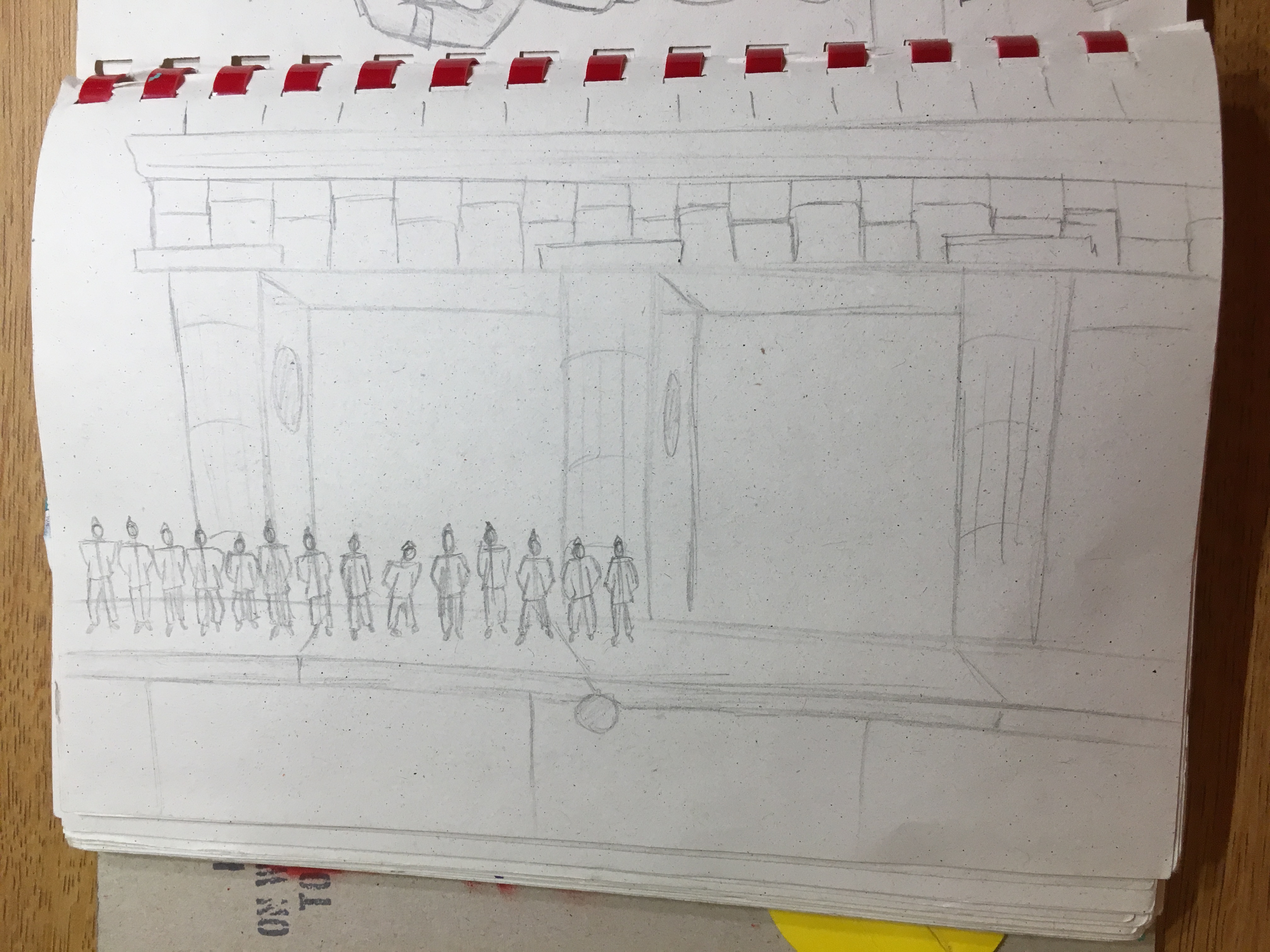
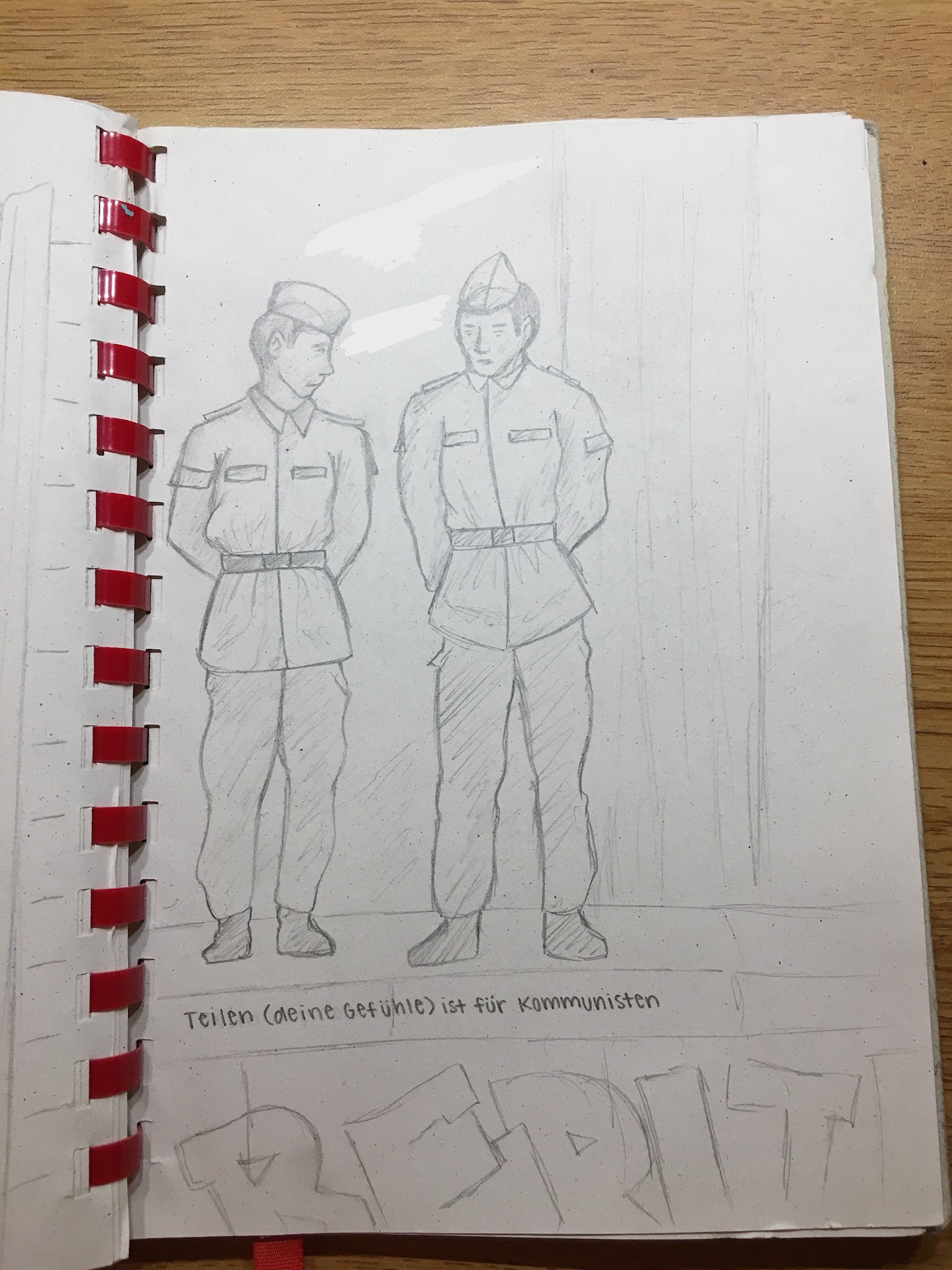
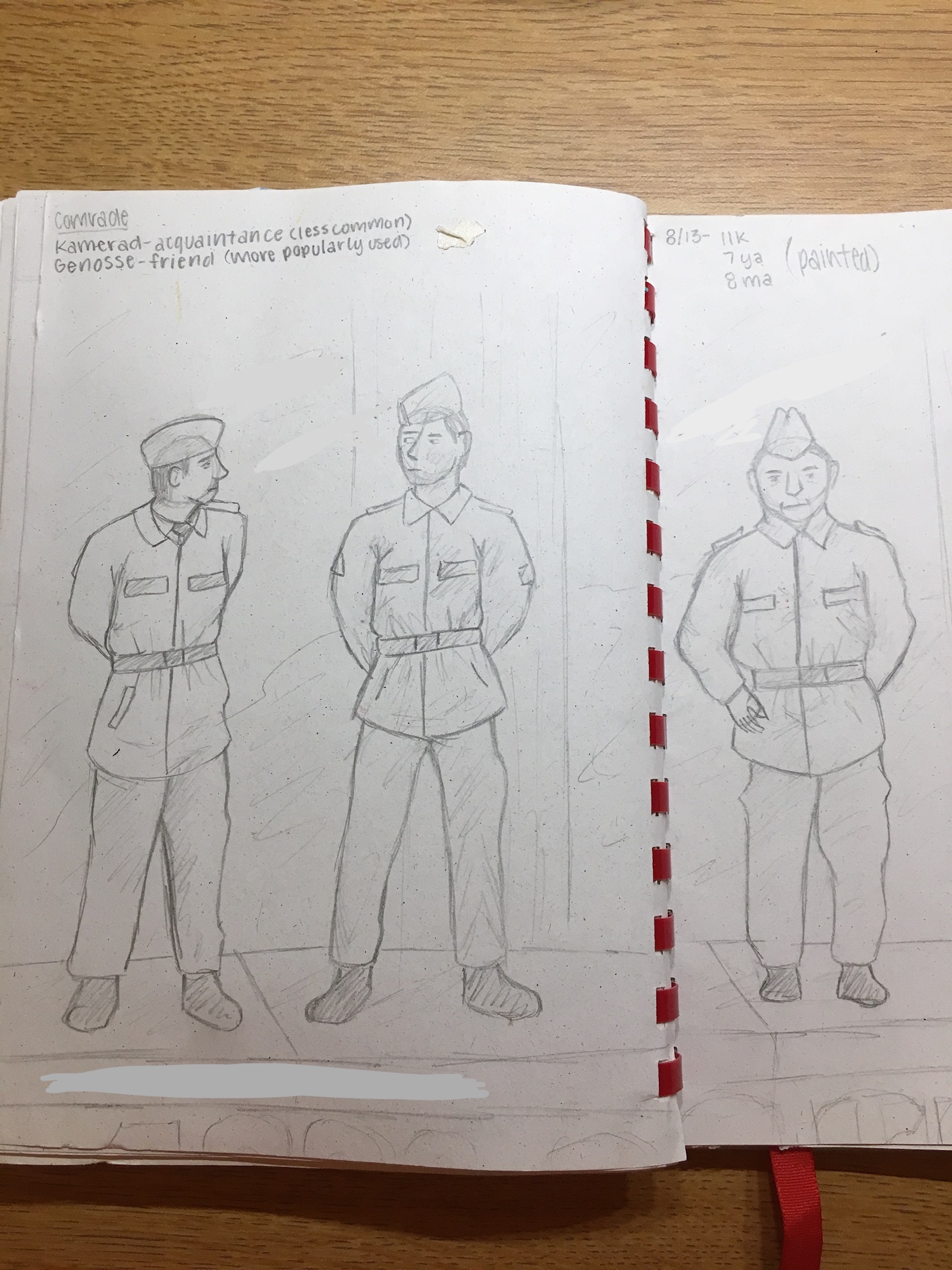
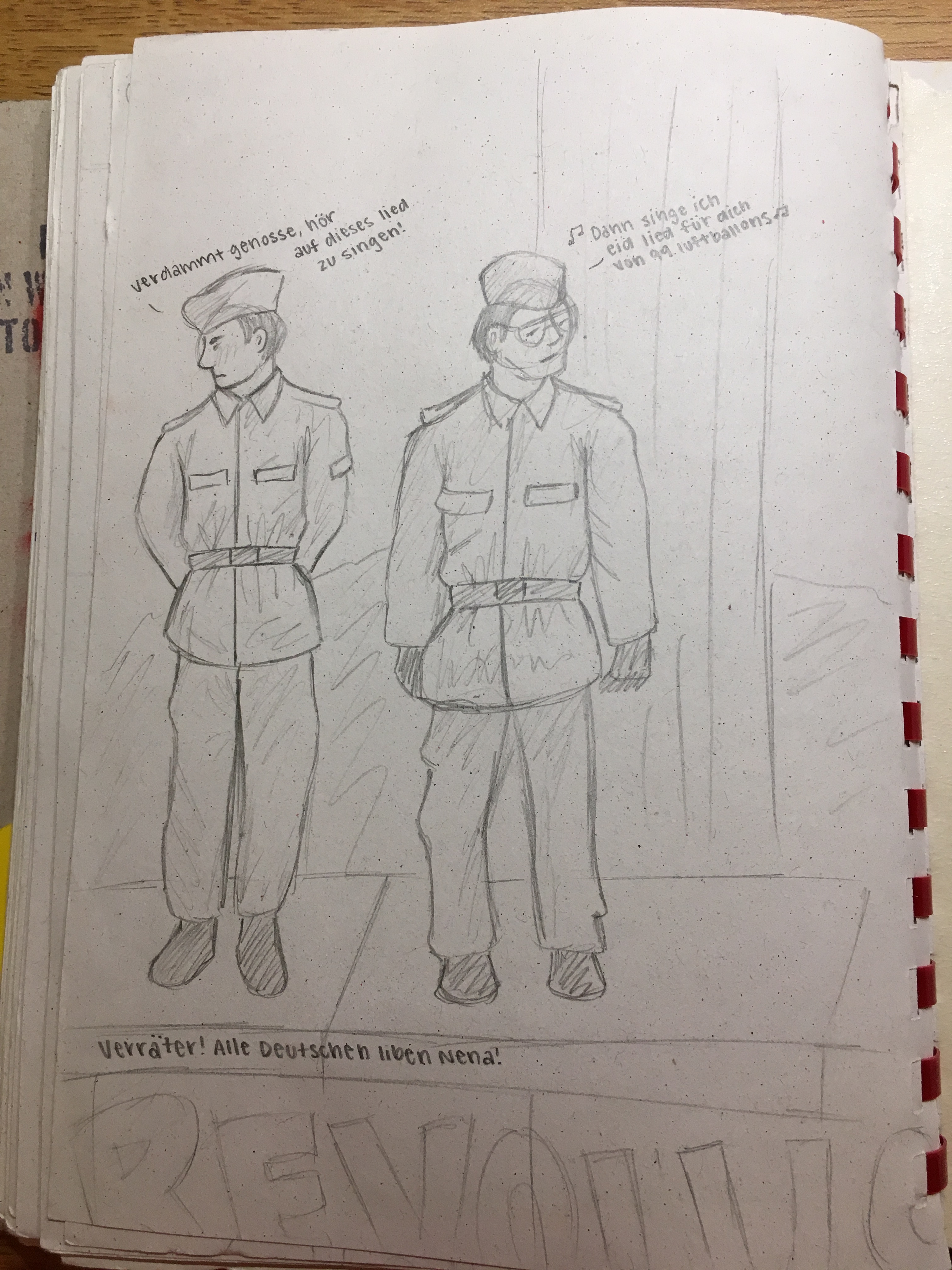
I was drawn (literally, because I was drawing) to photos of soldiers. Revolution Starts in the Streets featured a floor to ceiling print of East German soldiers atop the Berlin Wall at Brandenburg Gate. The soldiers do not stand orderly, but rather lean whispering to one another, two days after the announcement of the Wall’s destruction.

It was somewhat pointless for them to be up there and they knew it. It adds humanity to history to see soldiers depicted in candid ways, so I drew each in individual detail. Personal items such as this print play a critical role in connecting the public.

Museums like the NCSML do an exemplary job of curating exhibits so visitors can connect on a variety of levels. It is crucial that the detailed facts are available for people who come to learn about ‘foreign debts, homeless Vets, AIDS, crack, Bernie Goetz’, but just as this song juxtaposes random people, places, and events, so too must the minds of visitors be stimulated to compile their own souvenir Wunderkammer of personally compelling history.

Me, in my ‘staff’ shirt and smock, posing with artwork of Billy Joel on the Berlin Wall painted by my brother.

[Lyrics from “We Didn’t Start the Fire”, Billy Joel 1989.]

WEEK I

Is Facebook Public History? Sure it is.

Facebook is almost a historical mode of communication and connection in itself at this point (I had to look up a picture just to draw the logo accurately), but when the textbook mentioned Yu’pik teen sensation Byron Nicholai’s videos, I began thinking about Public History not just as history outside of the classroom, but also history outside of the museum. 

Throughout high school, I held the prestigious role of Cartoonist for my school’s student newspaper. I have drawn my fair share of history themed cartoons, but for the most part, my portfolio contains jokes about the student parking lot, cafeteria “food”, and prom. I never considered my sketches for the newspaper (a classic primary and secondary source) history. Yet, I imagine that looking back through those papers years from now, the sight of those drawings will remind me of certain points in my history, and the history of my high school. 

Drawing cartoons for publication is very similar to practicing public history in designing an exhibit. It is the historian’s job to make history relevant to a non-academic audience, just as my cartoons were drawn to be funny for high schoolers, teachers, and parents alike. Historians must work with stakeholders to create displays ethically conscious of the people to whom they will be presented. As a cartoonist, I was very conscious of stakeholders as I carefully ensured jokes were not made about administration or certain groups of students, but rather situations relatable to a wide range of readers. Other aspects are also shared, but the most similar exercise is that of reflective practice. For a time, I maintained a (now cringey and defunct) blog for my cartoons on which I posted jokes, reactions from my peers, sketches, and so on. At the time, I didn’t think much of what I was doing, but I was developing a crucial skill for the career in public history of which I have always dreamed. 

The discipline of published media in general is quite analogous with public history. Sites like Facebook, and more relevantly, Twitter and Instagram, are essentially public archives of the last decade or so of human life. Though some users take heed of this more than others, it is imperative to think about the same critical ethical questions whether posting something like a cartoon online or putting together an exhibit. The internet is perhaps the ultimate platform for uninhibited dialogic history as barriers such as location and language fade away to allow for the sharing of stories and opinions.

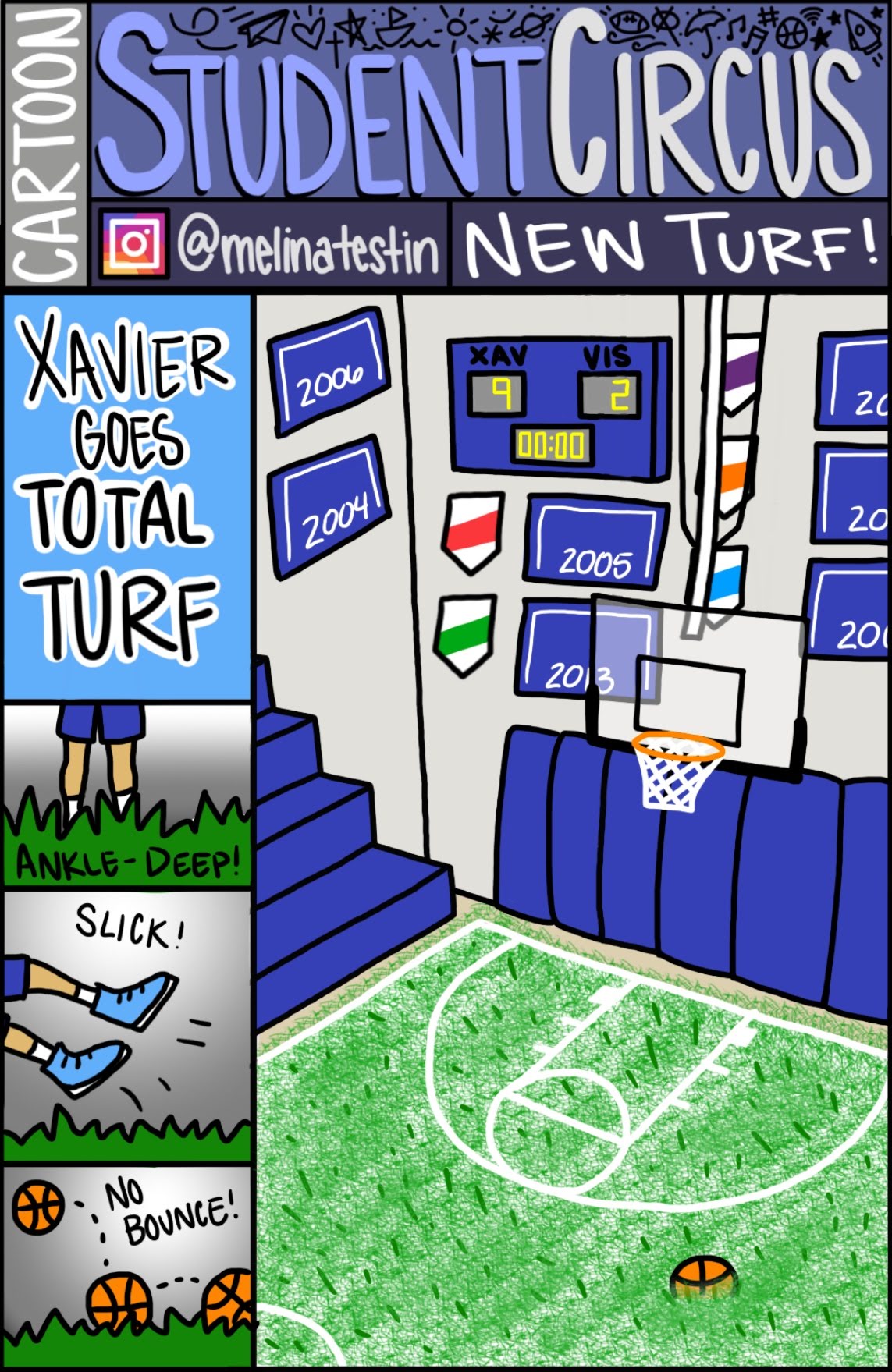
I hope when historians inevitably write on the cultural impact of Xavier High School 2015-2019, they do not become discouraged by cartoons falsely stating that Xavier turfed their gym floor,

undefined

but instead recognize them as invaluable tools that captured transient social practices, just like Byron Nicholai’s videos that preserve his peoples’ culture for generations to come.

I am looking forward to drawing more public history themed cartoons and further mapping out my history on this blog.

Design a site like this with WordPress.com
Get started